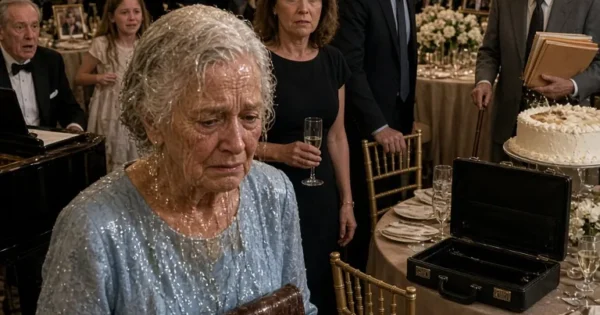

Part 1: The Woman They Thought Couldn’t Fight
The first thing my mother-in-law did when she saw me in court was laugh. It was a small, polished laugh, hidden behind manicured fingers and a diamond bracelet. The kind of laugh that wasn’t meant to be loud because everyone in the room was already supposed to understand the joke. I was the joke. Across the courtroom sat my husband, Nathan Blackwell, surrounded by three attorneys who looked as though they had stepped out of a corporate boardroom. Italian suits. Leather files. Laptops. Color-coded binders. His family owned Blackwell Holdings, one of Illinois’s most powerful commercial development firms. I had a scuffed leather tote bag and a paper cup of water. Nathan glanced at me, then at his attorneys. He looked comfortable. His father, Grant Blackwell, leaned back in the gallery with a satisfied smile. Eleanor, my mother-in-law, sat beside him, watching me as if she were waiting for a waiter to clear an unwanted plate from the table. Judge Mariana Ellis looked down at me over her glasses. «Mrs. Blackwell, do you understand that you have the right to retain legal counsel?» «Yes, Your Honor.» «And you wish to represent yourself?» «I do.» There was a pause. Then I heard a few quiet whispers behind me. I didn’t have to turn around to know what they were saying. She can’t afford a lawyer. She’s going to lose. What does she think she’s doing? For seven years, the Blackwells had treated me like a charity case who had somehow wandered into their family. They never asked what I had sacrificed for Nathan. They never asked why I had stepped away from the career I once loved. They only saw the woman who managed the house, organized family events, handled Nathan’s schedule, and quietly solved problems before they reached him. To them, none of that counted. Three weeks earlier, Nathan had placed a white envelope on the marble kitchen counter. «What is this?» I asked. «You know what it is, Clara.» I opened it. Divorce papers. The petition described our separation as simple. Clean. Almost clinical. It claimed irreconcilable differences, demanded a complete separation of assets, and suggested that I had made no meaningful financial contribution to our marriage. I looked up. «You’re saying I contributed nothing?» Nathan sighed. «Clara, you managed the house. You ran errands.» «I managed your corporate galas.» He said nothing. «I managed your public schedule. I handled private appointments. I reviewed documents you were too busy to read.» Nathan gave a short laugh. «Don’t turn hostessing into a federal case.» I remember staring at him for several seconds. Not because I didn’t have an answer. Because I suddenly understood that he had never really known me. Now his attorney was standing in court, explaining why my contribution to the marriage should be considered «strictly nominal.» I listened without interrupting. Then Grant leaned forward from the gallery. «You’re too poor to hire a real lawyer, Clara.» The words were loud enough for several people to hear. Nathan didn’t correct him. Eleanor smiled. I lowered my eyes for a moment. Then I reached down beside my chair. My hand closed around the worn handle of my old leather bag. I opened it. Inside was one red-labeled folder. Nothing about it looked expensive. That was exactly why nobody noticed. I placed it carefully on the table in front of me. Nathan’s expression changed slightly. His lead attorney stopped turning a page. Judge Ellis looked toward me. «Mrs. Blackwell?» I stood. «I’d like to submit an exhibit, Your Honor.» The room became strangely quiet. For seven years, the Blackwells had believed they knew exactly who I was. They thought I was the wife who had been lucky enough to marry into their family. They thought I was too poor to fight them. They thought representing myself meant I had nothing left. They had never bothered to learn what I had done before I became Clara Blackwell. Because before the designer houses, charity galas, and Blackwell family dinners, I had spent more than a decade serving as a Senior JAG Officer prosecuting financial fraud for the U.S. Army. And the red folder on that courtroom table contained the first evidence of what I had discovered. The judge reached toward it. I watched Nathan’s face. For the first time that morning, he wasn’t smiling. My mother-in-law wasn’t laughing either. And his attorneys suddenly looked much more interested in the folder than they were in me. The woman they had dismissed as helpless had finally opened her bag. Reflection: Sometimes people mistake quietness for weakness because they never bothered to learn what someone is capable of. And sometimes the person they underestimate has been paying attention the entire time.
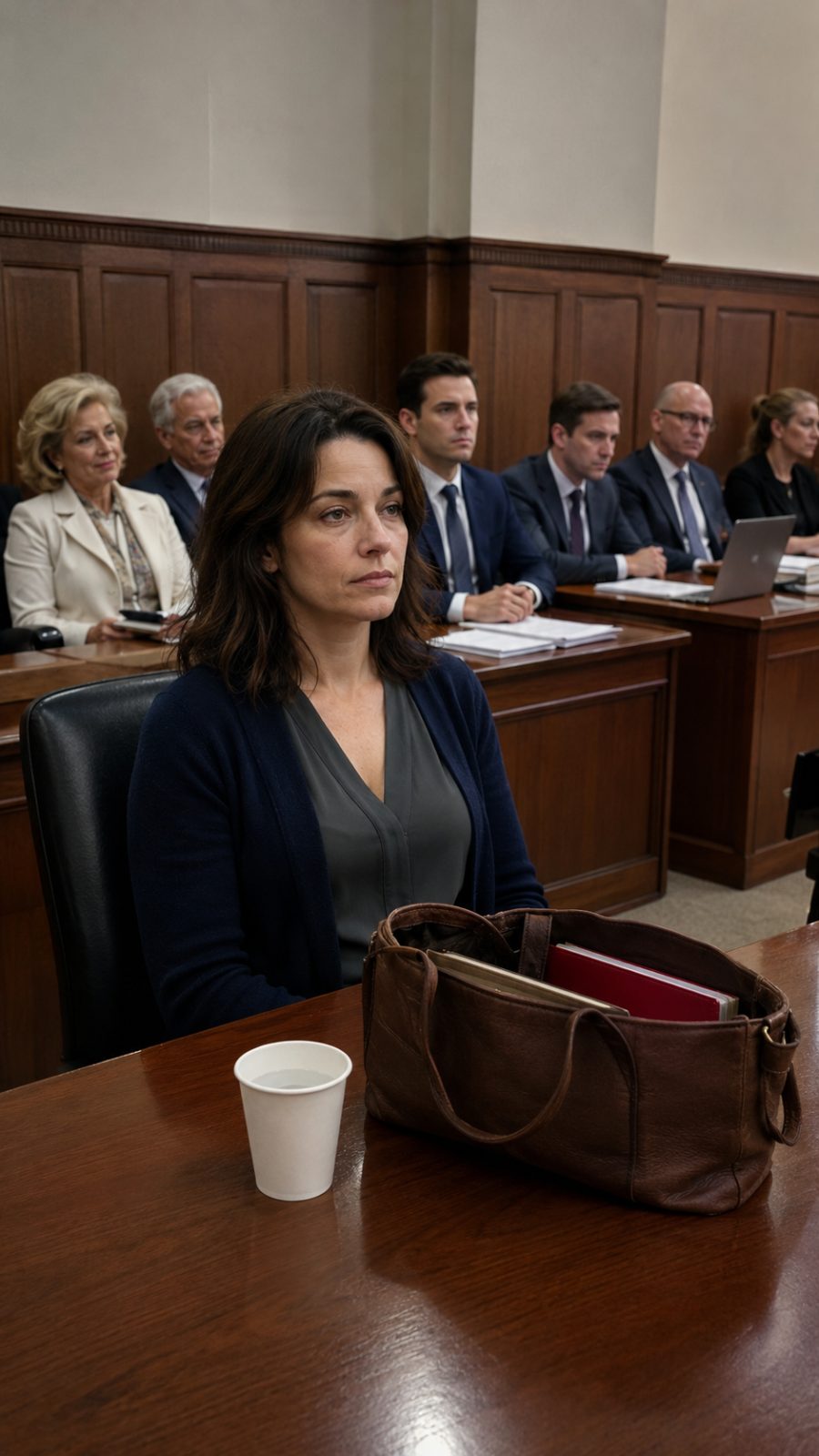
Part 2: The Truth Revealed
Judge Mariana Ellis opened the red folder. She read the first page. Then the second. The courtroom stayed silent. Nathan’s lead attorney finally spoke. «Your Honor, we would like a moment to review the material before proceeding.» I looked at him. «You’ll have the same opportunity I had.» He frowned. «To review what?» I slid the first document across the table. «Financial transfers.» Nathan’s face went pale. His attorney picked up the document. I continued. «Over several years, money moved between Blackwell Holdings and a series of related companies. Some of those companies were connected to properties that were never disclosed in our marital financial statements.» Grant stopped smiling. Eleanor’s hand went still against her bracelet. Nathan stared at me. «Clara, what are you doing?» «What you should have done years ago.» His attorney began flipping through the pages. The evidence wasn’t one dramatic document. It was a trail. Transfers. Corporate relationships. Property records. Financial statements. Transactions that looked ordinary when viewed separately but became very different when placed beside one another. I had spent years prosecuting financial fraud. I knew that the strongest evidence didn’t always announce itself. Sometimes it waited in the spaces between documents. Judge Ellis looked at me. «Mrs. Blackwell, how did you obtain these records?» «I reviewed documents that were available to me through the normal discovery process, Your Honor, and I compared them against the financial information submitted in this case.» Nathan shook his head. «You weren’t supposed to understand any of that.» I looked directly at him. «That was your mistake.» His attorney asked for another recess. Judge Ellis granted it. During the break, Nathan approached me. For the first time in seven years, there was no smugness in his voice. «Clara, we can fix this.» «You could have fixed it before you filed.» «I didn’t know you were doing this.» «You never asked.» He looked toward the red folder. «What else is in there?» I closed it. «That depends on what your family decides to disclose.» When court resumed, the atmosphere had changed. The three attorneys who had arrived looking completely confident were now speaking quietly among themselves. The Blackwells had expected an exhausted wife with no resources. Instead, they were facing someone who understood financial records, evidence trails, corporate structures, and the difference between an accusation and something that could actually be proven. Judge Ellis ordered the financial records to be examined carefully before any final division of assets could proceed. The divorce would not be the quick victory Nathan had expected. The financial disclosures would be reviewed. The disputed transactions would be examined. And the evidence from my red folder would become part of that process. Grant sat back in his chair. He didn’t laugh again. Eleanor stared at me as if she were seeing a stranger. Maybe, in a way, she was. She had spent seven years looking at my clothes, my quiet personality, and the life I had chosen inside their family. She had never looked closely enough to see the woman underneath. Nathan came to me after the hearing. «I thought you needed us,» he said quietly. I shook my head. «No, Nathan. You thought I needed you.» He didn’t answer. That was the moment I understood the real difference between us. He had measured my value by what he believed I could afford. I had measured mine by what I knew I could survive. The Blackwell family’s wealth had given them expensive attorneys, impressive offices, and the confidence to assume they would always control the room. But money could not erase a paper trail. It could not turn false statements into truth. And it could not make me forget what I had learned during more than a decade of prosecuting financial fraud. I didn’t need to destroy the Blackwells. I didn’t need revenge. I only needed the truth to be examined by people who had the authority to do something about it. As I walked out of the courthouse, I carried the same old leather bag I had brought in that morning. It was still scratched. Still worn. Still inexpensive. But for the first time, I realized I didn’t care what anyone thought it said about me. The Blackwells had spent years believing that wealth made them untouchable. They had mistaken my silence for helplessness. And that mistake finally cost them the one thing their money had never been able to buy: control of the truth.
Discover more heartwarming stories and emotional moments on our main editorial page.

Family Cellar Betrayal Story: Hidden Truth — An Inspiring Family Story
Read Full Story ➡️